
Boerewors is more than a sausage. In South Africa, it represents shared meals, open fires, and long afternoons spent around a braai. Its distinctive spiral shape, coarse texture, and warm spice profile make it instantly recognisable and deeply tied to South African food culture.
Unlike many modern sausages, boerewors has remained largely unchanged over time. The same principles that shaped it generations ago: quality meat, simple seasoning, and careful preparation, still define how it’s made today.
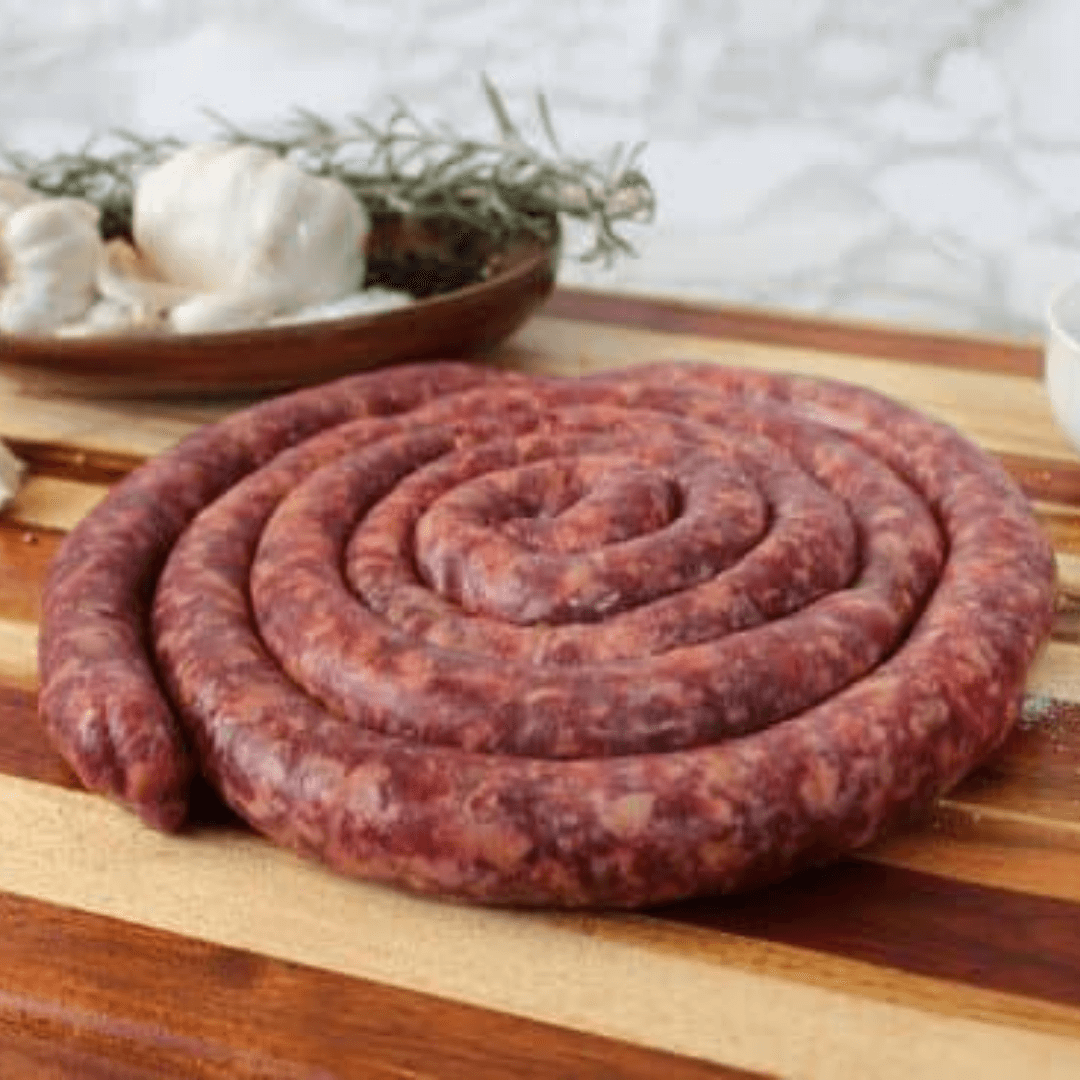
Boerewors originated in South Africa during the early settlement period, when Dutch and European farming communities adapted familiar sausage-making techniques to local conditions. Meat needed to be preserved, seasoned well, and cooked over open flames rather than in kitchens.
The name boerewors comes from Afrikaans and Dutch words: boer, meaning farmer, and wors, meaning sausage. This reflects its roots as a practical, farm-based food rather than a refined product. It was designed to be filling, durable, and easy to cook outdoors.
Over time, boerewors became closely associated with the braai, evolving from a practical staple into a symbol of South African social life.

While the sausage has its roots in South Africa, well-made boerewors is now produced in the UK using traditional methods and authentic spice blends. The focus remains on high meat content, balanced seasoning, and the coarse texture that defines a proper boerewors sausage. When these standards are followed, the result stays true to the original, even when made outside South Africa.
For UK customers, access to authentic boerewors means enjoying a South African classic without relying on imports. It also allows the tradition of the braai to continue, adapted to British summers and shared with a wider audience who value quality meat and simple, well-seasoned food.
What sets boerewors apart is how tightly it’s defined. South African food regulations specify that boerewors must contain at least 90% meat and must always include beef. Fat content is limited to no more than 30%, helping maintain a balance between flavour and texture.
This approach results in a sausage that tastes meat-forward rather than heavily processed. The coarse grind allows the meat to stay juicy during cooking, while the spice blend enhances flavour without overpowering it.
Although beef is essential, different versions have developed over time. Some include pork, chicken, or game alongside beef, offering subtle changes in flavour while keeping the same overall structure.
Salt and vinegar play an important role beyond seasoning. They help preserve the meat and sharpen the overall flavour, particularly when the sausage is cooked over a high heat. The mixture is stuffed into natural casings and traditionally shaped into a long spiral, which cooks evenly and is easy to turn on a braai.
While modern recipes sometimes vary, the traditional spice blend remains the reference point for what boerewors should taste like.
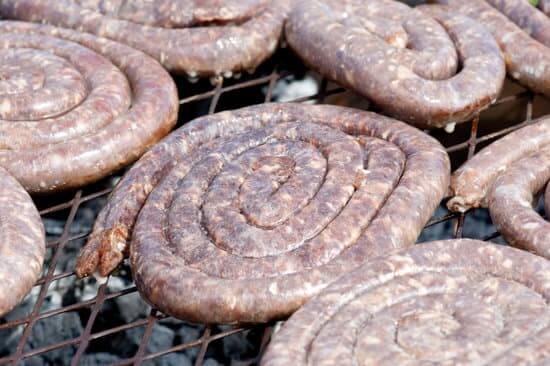
Boerewors is inseparable from the braai. It’s rarely rushed and almost never cooked indoors when tradition is followed. Preparing boerewors is as much about the process as the result: slow cooking, careful turning, and letting the sausage develop flavour without piercing the casing.
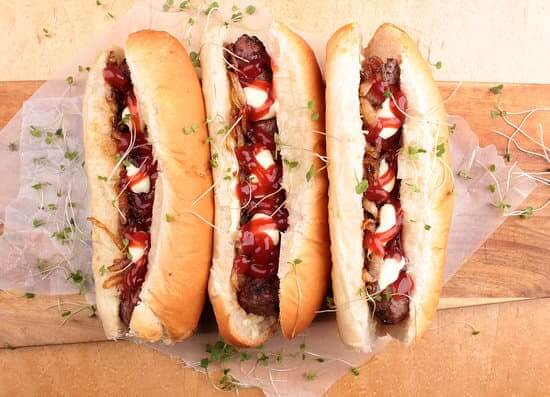
Served simply in bread as a boerie roll, boerewors doesn’t rely on heavy sauces or toppings. The focus stays on the meat and spices, which is why well-made boerewors stands out even with minimal accompaniments.
For many South Africans, boerewors is tied to family gatherings, weekends, and celebrations. It’s often the first item on the braai and the last to be finished.
Although deeply rooted in South African tradition, boerewors is now enjoyed well beyond its country of origin. As South Africans moved abroad, demand grew for sausages that tasted familiar and stayed true to traditional methods.
When boerewors is produced outside South Africa, quality depends on sticking to the original principles: high meat content, correct seasoning, and proper preparation. Done properly, it retains the flavour and texture that define it, regardless of where it’s made.
For those living in the UK and elsewhere, being able to find authentic boerewors helps keep a connection to South African food culture, even far from home.
If you’re in the UK and want to explore boerewors made using traditional methods, you can view our full range of South African boerewors in the UK here.