
Knowing how to store biltong properly is essential if you want to keep it fresh and avoid mould. Biltong is a naturally air-dried product, but it still contains moisture. Store it incorrectly, especially in the UK’s humid climate, and you increase the risk of spoilage.
This guide explains exactly how to store biltong before opening, after opening, and in whole-stick form, without compromising quality.
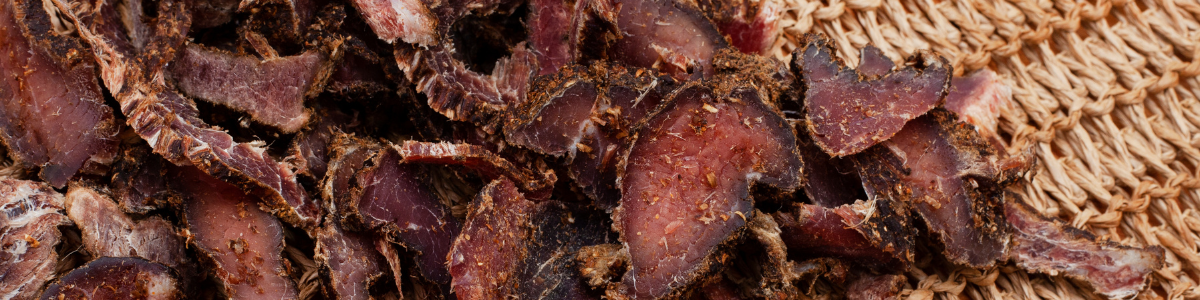
Biltong is preserved through drying, not heavy processing. That means it is stable, but not indestructible.
Mould only forms when four conditions combine:
Water + Oxygen + Heat + Contact = Mould
Understanding how to store biltong correctly means controlling those four factors.
In South Africa, lower humidity makes storage easier. In the UK, moisture in the air makes proper airflow far more important.
The wetter you prefer your beef biltong, the more carefully it must be stored.
If you buy biltong online, storage starts as soon as it arrives.
Before opening:
Once opened, biltong becomes exposed to oxygen and humidity. This is when most storage mistakes happen.
If you are storing sliced beef biltong:
Biltong needs to breathe.
The softer or wetter the cut, the shorter the shelf life.
Whole sticks require airflow, not containment.
To store whole sticks correctly:
If you are researching how to store biltong because it has gone mouldy before, the cause is usually one of the following:
Refrigeration is not recommended.
Moving biltong in and out of the fridge introduces condensation. When cold meat meets warmer air, moisture forms. That moisture creates the conditions mould needs.
Freezing is also not recommended. When biltong defrosts, it naturally releases moisture. That released moisture significantly increases spoilage risk.
If freezing is unavoidable, it must be defrosted in open air so it can dry properly. However, the best approach is to buy quantities you can enjoy while fresh.
Biltong is best enjoyed fresh.
The safest way to store biltong long term is not through freezing or refrigeration. It is through correct airflow and sensible purchasing.
If you regularly buy biltong online, order manageable quantities and store them properly from the start. Fresh biltong, stored correctly, delivers the best flavour and texture.
To prevent mould, you must reduce moisture build-up and surface contact. Keep biltong in a dry, ventilated area and avoid sealed containers. Allow airflow around the meat and turn sliced pieces daily. In humid climates like the UK, airflow is essential.
No. Airtight containers trap moisture and cause sweating. Sweating increases surface moisture, which increases mould risk. Biltong should be stored in open air once opened.
Moist biltong contains more internal moisture and therefore has a shorter shelf life. Store it in an open bowl, turn it daily, and consume it within 3 days. Avoid refrigeration and sealed storage.
Hang them in a cool, dry, well-ventilated space. Ensure they are not touching surfaces. Do not store in sealed containers.
Higher humidity increases the amount of moisture in the air. That moisture can settle on the surface of biltong, particularly if airflow is restricted. Proper ventilation reduces this risk.